Recall.ai, Up Close: An Hour With the Company Behind the Meeting Bots
A chat with cofounder Amanda Zhu at Recall.ai's San Francisco office.
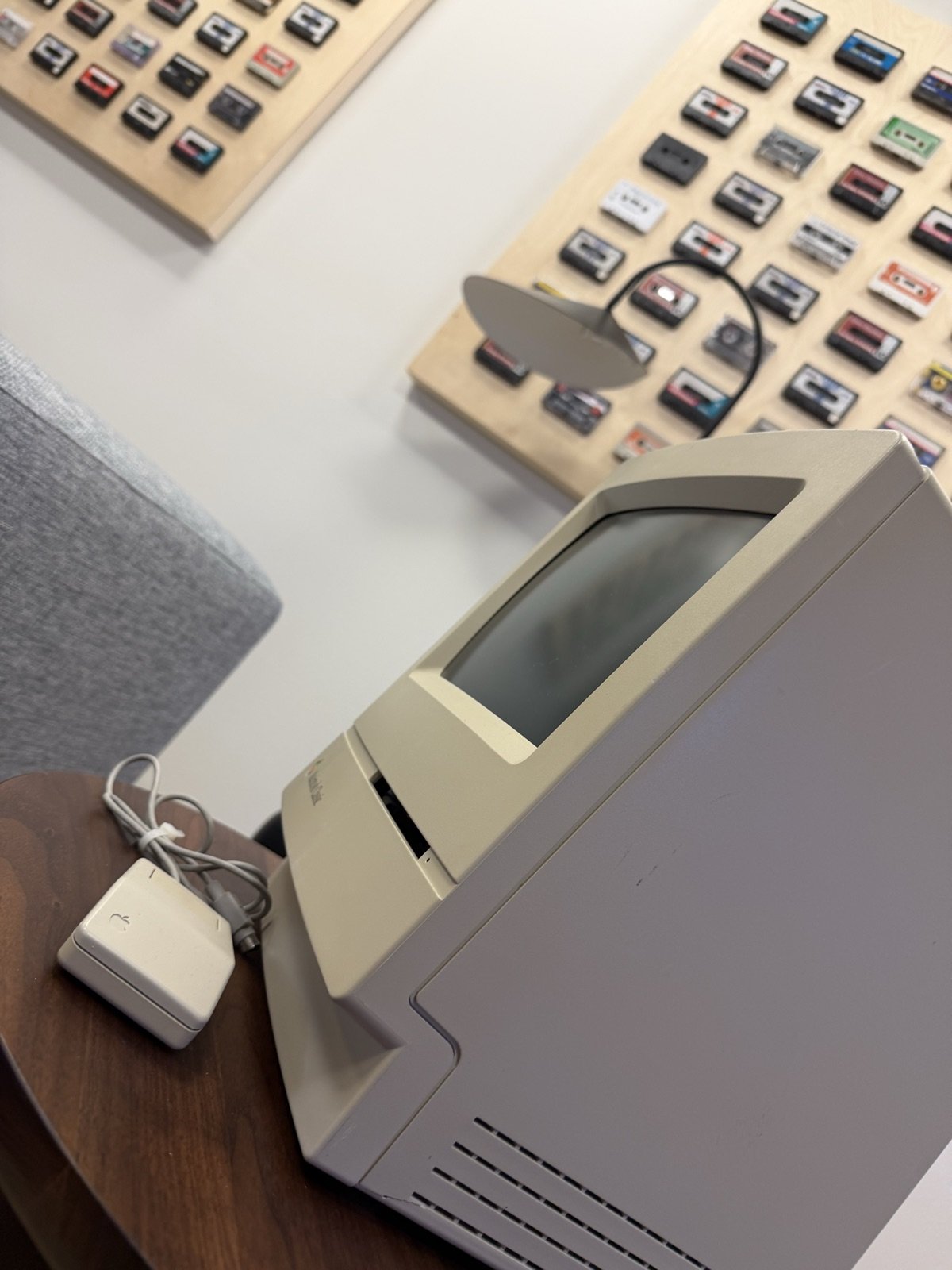
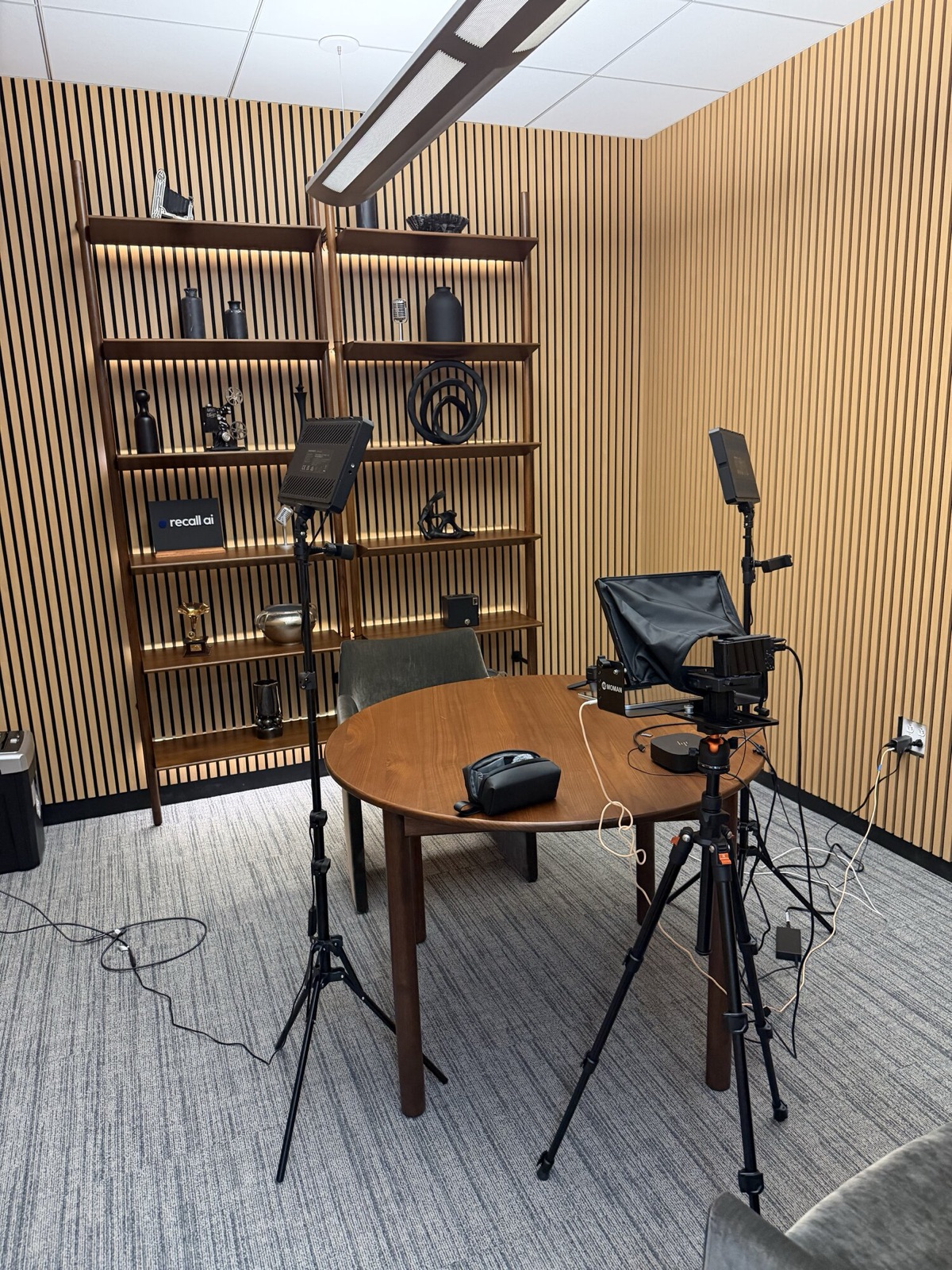
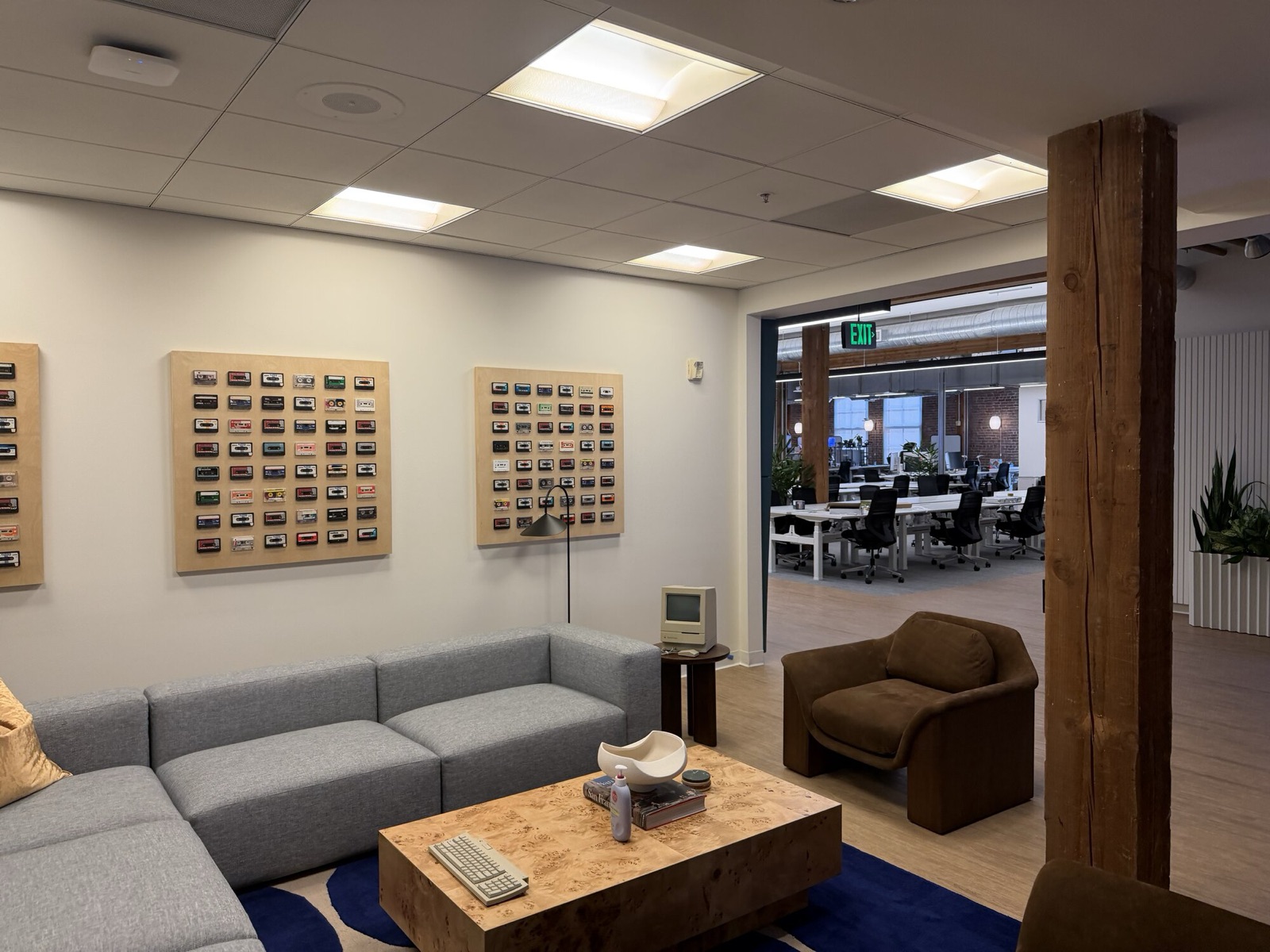
The lobby of Recall.ai's office at 475 Brannan Street has a compact Macintosh from around 1990 on a side table, under a wall of cassette tapes. Further in there is a brass bell, a podcast room, a kitchen, a library, a gym, and a nap room. The company that runs the bots in your Zoom calls keeps a thirty-six-year-old computer by the door.
I arrived early on a Monday morning in August 2026 for a tour. At ten I sat down with Amanda Zhu, cofounder and COO, who owns pricing and go-to-market. Afterward I stayed for the photographs. Recall answered written questions later.
The layer under the notetakers
Notetakers were the first products built on the record of a meeting. The second wave reads it rather than transcribes it: sentiment on a sales call, which engineer never speaks at standup, a rep scored against her own calls from last year. All of it needs the raw material first, from every platform, reliably, and most of those products do not want to run a fleet of bots.
Recall.ai sells that layer. One API puts a bot in the call, or records from the participant's own machine, and hands back the audio, the video, the transcript and who said what. The customer's engineers never touch a meeting platform. Over 3,000 companies build on it, and if you have used an AI notetaker, a CRM that logs calls or a hiring tool that records interviews, there is a fair chance Recall was running underneath.
0.02% of US conversation hours
Amanda brought up the goal herself, while explaining where the Desktop SDK fits. Recall wants all the conversation data in the world in a form that is accessible and understandable, and it measures itself against that. In 2025, she said, Recall captured 0.02% of all conversations in the United States. A tiny sliver, she called it. In writing, the company corrected the unit to hours. Virtual meetings are the only source it captures today. In-person, phone and VoIP calls: "we haven't integrated yet." She then gave me the scale without being asked.
We have over 100,000 computers in our cluster. We're processing 5 TB of video data per second.
Recall would rather not publish compute figures at all. When I asked whether these were still current, the answer was that the number is already stale, which for a company adding capacity every month is a reasonable thing to say. It cleared the August figures for publication anyway, asking only that the staleness sit right beside them. So take these as where Recall was on the day I visited, not where it is now. The only public figure of any kind is on its engineering blog, which describes "processing TB/s of real-time media streams" across many thousands of cloud instances. That is an order of magnitude, not a number.
What $0.50 buys
Recall sells three things and prices them apart: ingest, transcription, and storage. Ingest is getting the media out of the meeting, either with the bot that joins the call or with the Desktop SDK that records from the participant's own machine. Both cost $0.50 per hour on pay-as-you-go (archived August 5), and a contract customer buys a pool of hours or dollars to spend against either.
The bot joins Zoom, Google Meet, Microsoft Teams, Webex, GoTo Meeting and Slack Huddles. Skribby, MeetingBaaS, Nylas and Attendee each list the first three. None of them sells a desktop SDK. Transcription is a separate line, often cheaper than buying the same engine direct because Recall buys in bulk. Storage is free for a week, then $0.05 per recording hour for each 30 days. Recall also said in writing that pay-as-you-go now includes Zoom's real-time media streams.
From outside, the Desktop SDK looks like a second product line. Amanda says it is the same product with a different way in, and consent is a large part of what decides which one a customer picks.
Enterprises care a lot about consent. They care about making sure that people on the call know that it's being recorded. But startups actually don't care about as much. So enterprises are like, the bot is very obvious, it's there. […] They actually really like it's obvious. And then some startups, they don't care that much about consent. They want something a bit more discreet. So then the desktop is sometimes better. So it also depends on industry and size of company, who cares about what form factor.
The engineering claim behind desktop is specific: separate audio streams per participant, plus video and speaker names, even when two people talk over each other, without loading the host machine.
No official API exposes any of that. Recall spent several months on it and is not done. Her test for whether work like that is worth doing: "What are things where we can put in ten times the effort and get three times the value back."
On build versus buy she did not oversell. "We actually encourage our customers, if they're doubtful, to try building themselves," she said, because they come back. I put six to twelve months to her as a build estimate. She did not dispute it, which is the weakest kind of confirmation, and she qualified the result: that gets a team to 90 or 95% reliability, which is short of parity. If your users do not care about reliability, she said, building is fine.
$0.25 an hour, under 100 employees
Recall launched a startup program the week before we met: $0.25 per hour for the first 10,000 hours. "If you hit that limit you can just go normal," Amanda said. The page describes who it is for in qualitative terms. The one hard rule is not on the page yet. Amanda gave it to me on tape and cleared it for publication: eligibility is companies under 100 employees.
Early-stage startups care about price and little else, she explained, because they do not know whether they will exist in a year. Recall was losing them to whichever option was cheapest, then closing the same companies later once their users started caring about reliability. The program removes that gap so nobody builds on a competitor first.
The 10,000 hours came from usage data and from talking to startup customers. The price finding came from the ones who tried Recall and walked. The cap is sized to outlast that uncertainty, not to fund a growing company. Anyone who burns through it is past that point. "They're probably at a point where they have customers," she said. "If they use that much you probably need to do more than internal meetings." Recall subsidizes the rate. On the margin: "It's not great […] but that's why it's also capped." In writing, Recall added that the rate covers the Desktop SDK too, and that companies leaving the program often qualify for volume discounts on the way out.
Here is the cheapest published way in at each of the five vendors, per recording hour with transcription included, taken from their live pricing pages:
| Vendor | Per hour | What that rate actually is |
|---|---|---|
| Attendee | $0.35 | Open source. Hosted plan is $0.50, $0.35 at volume, caption-based transcription |
| Skribby | $0.39 | Audio only, no speaker separation. With video and a speaker-separated model, $0.50 |
| Recall.ai | $0.40 | Startup program only: $0.25 plus $0.15 built-in transcription, first 10,000 hours |
| MeetingBaaS | $0.44 | The $1,500 prepaid token pack, divided by the hours it buys |
| Nylas | $0.65 | Overage rate on the annual plan, bundles summaries |
Read the right-hand column before comparing the middle one. These are not the same bundle at five prices. The transcription engines differ, video and real-time streams are not included consistently, and the transcription Recall charges $0.15 for is included in the Nylas price. Attendee's included transcription is the meeting platform's own captions, not a real engine, unless you supply a provider key.
Recall's startup rate sits a cent above Skribby's cheapest audio-only tier and below every matched configuration except Attendee at volume. Past 10,000 hours the picture changes. Recall's own list price with transcription is $0.65 an hour, which is the Nylas number in the table. Skribby is cheaper than Recall pay as you go at every matched configuration. MeetingBaaS gets cheaper the more tokens you prepay. The discount is for the buyer who picks on price.
Recall has been cutting list price as well. CEO David Gu quoted $0.70 an hour on Hacker News in September 2025. The list price is $0.50 today, with $0.25 for startups.
The footer lists four competitors
I asked whether Recall has a nemesis, a name that keeps turning up in lost deals. She said no.
With Perfect Recall we learned that you shouldn't pay attention to competitors. […] We were very obsessive over competitors. In fact we competed with some of our current customers. […] They're a company called Grain.com, and they're like a meeting recorder product. They were one of the first, and we were direct competitors with them, […] and we cared a lot about what they did. […] That was the wrong move. Because the thing is, if you care about competitors, you always want to stand behind. […] What a competitor does shouldn't actually dictate what you as a company do.
Perfect Recall was the founders' first company, a notetaker. Grain, the competitor it obsessed over, is now a logo on Recall's startup program page. Since then, she said, Recall does not look at competitor posts, positioning, or pricing, and investigates only when a competitor is affecting a customer. She was not sure the sales team knows competitor list prices, because customers rarely bring one. They bring a custom offer.
We're the best product by far in terms of different features, different form factors, close relationship with the meeting providers, reliability. […] When we ask customers, what's [the] feedback for Recall, they never say anything about these things. The only thing is, I guess, just pricing, because that's the only thing left. So it's the only leverage that other companies have right now.
She put it in absolute terms, "we explicitly don't look at competitors, even at whatever pricing they have," and gave the exception herself straight after: "If it's affecting our customers, then we will figure out what's going on and address that. But we won't look at what they're posting."
The footer of every page on recall.ai links five comparison pages, one each against Attendee, MeetingBaaS, Nylas and Skribby, plus a benchmark. I put that to Recall in writing. The answer, from Maggie Veltri, who writes Recall's content: "You're right that SEO is part of the reason those pages exist, and they're also useful for prospective customers evaluating their options. Our product priorities are driven by customer needs and the problems we're trying to solve rather than by reacting to competitors."
That distinction is a real one, and I cannot check the half of it that matters: nobody outside Recall sees the roadmap. The half I can check is the footer, and it does not fit the absolute version of the line.
Who buys, and who works there
I had assumed most customers record their own meetings. Amanda's count is the reverse: 99% use Recall inside someone else's product. That puts the consent decision two steps from the person being recorded. She named names. Fireflies and Circleback run their notetakers on Recall. Ashby and Greenhouse use it to record interviews. HubSpot is building a new product on it, she said. Instacart is an internal-tooling exception. Salesforce Ventures and HubSpot Ventures both invested in the Series B. Her advice for everyone else: unless you are a very large company, buy a notetaker off the shelf.
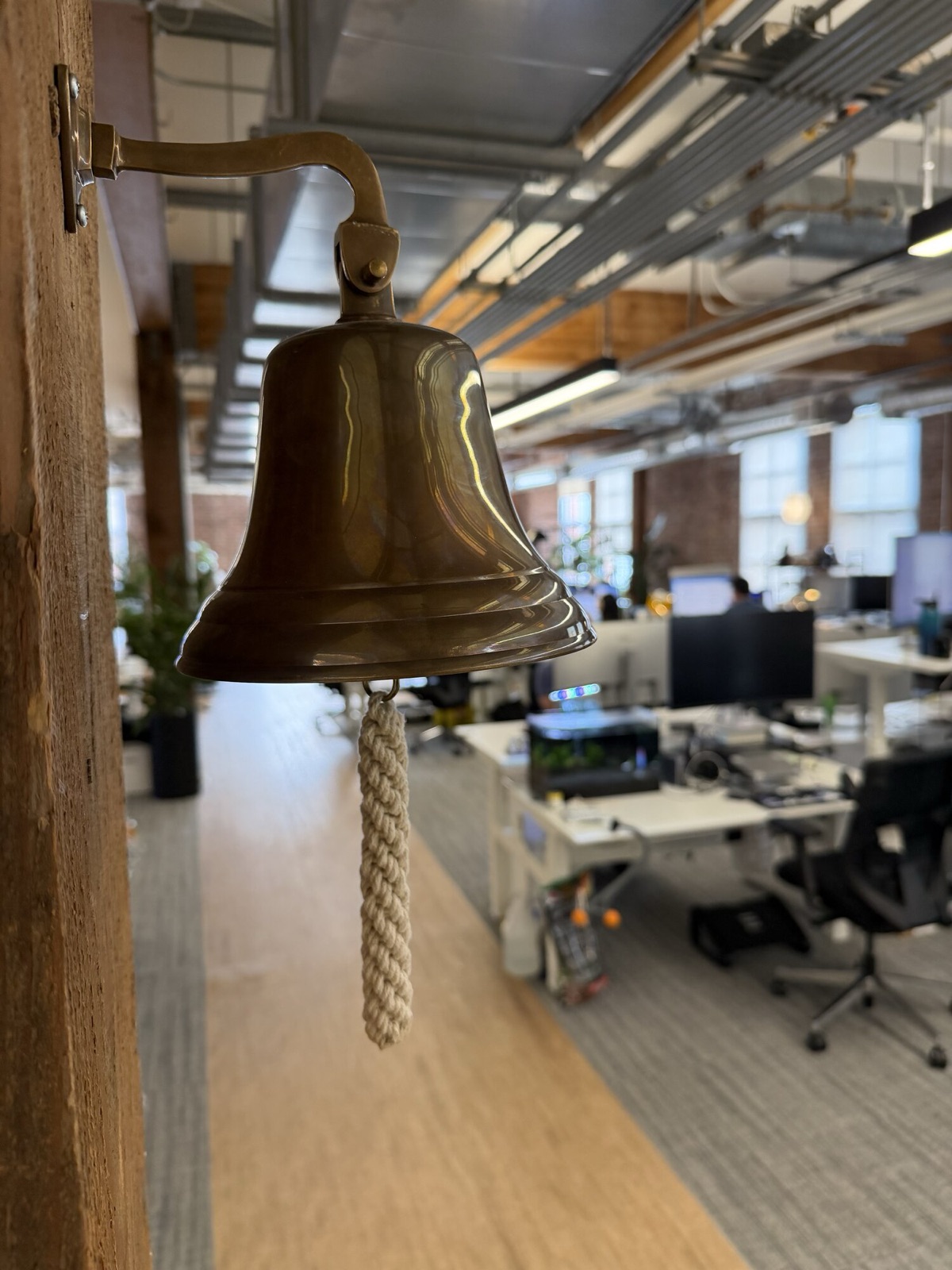
The bell was the VP of sales' idea, to ring on closed deals. He worried it would sit too close to engineering, so he asked the VP of engineering. Engineering wanted in on the action, so it hangs in the middle. Every engineer takes customer calls, and Recall interviews for that.
Sales is ten people: a VP and two managers, one on enterprise, one on what Recall calls velocity. Velocity means customers under 100 employees. The split is by headcount, and Amanda says headcount is the wrong measure: "We care about more of how much recording they do than how big they are." Fireflies is her example: not a big company, and it does more recording than its size suggests, so the sales team works it. Startups already doing volume come off self-serve to ask for a discount. Recall keeps volume discounts unpublished because, she said, a startup's discount and an enterprise's look nothing alike and printing both would confuse everyone.
She ranks marketing as the least mature function, so she sits with that team and is hiring into it. About 30% of closed-won contracts had heard of Recall at some point before the deal, she said. She said LinkedIn "definitely contributed" and would not claim more.
Paid acquisition is close to zero. Recall does not run ads or boost posts. It tried newsletter sponsorships and once mailed a postcard version of a LinkedIn post to households in a few Bay Area ZIP codes; neither became a motion worth keeping, Recall said in the fact check. A few dozen open-source projects credit it as a sponsor in their READMEs. That is the whole marketing spend I could find. The rest is the product, and two founders posting about it.
She posts more than most founders do, about hiring, the gym, her own calendar, and I asked whether that is designed exposure or habit. It started as coaching. She has a founder coach, and so does David. The post asking people to grade something one to five came out of that, and so did a rule about pacing.
This is probably going to be a contrarian take, is the word we use. But we also make sure we don't have too many of those back to back, because that can be bad. If we're getting a post with a lot of controversy, we'll take note of that, and then we'll pull off on that topic for a bit.
The coach stays out of the writing, she said. The posts are her own and David's lessons from building the company, "distilling that, packaging that, and putting that on the internet." So the voice is hers, and the controversy is metered.
All five open roles on Recall's job board are on-site in San Francisco, and the floor matches the posts: the gym is there, and so is the nap room, which Maggie said nobody really uses. I saw the same at Notion: a large nap room, good for the brand and good for hiring, and it can read the other way, as a hint that you are wanted here around the clock.
Recall publishes no headcount, and asked me to drop the third-party estimate I had been using. Fair enough. It was an estimate, and two people started while we were going back and forth.
Where some of the claims wobble
The status page. Recall sells reliability as the reason to pay its premium. status.recall.ai did not resolve on September 14, and no incident history appears anywhere on the site.
Recall says it handles this directly. When something breaks it tells affected customers in Slack, usually within minutes, and keeps updating them. I have no reason to doubt it and no way to see it. The only public record of a Recall outage I could find comes from a customer: Fellow logged a partial outage named "recall.ai outage" on March 24, 2026, lasting two hours and forty-five minutes. That page is Fellow telling its own users, not Recall telling Fellow.
I asked whether a public page is planned. The written answer described the customer status service, said incidents are rare, and closed with "we continuously evaluate how we communicate reliability and incident information as the company grows." I flagged the non-answer in the draft Recall checked, and the reply described the same process at more length. Neither said yes or no. The financial advisors page says Recall "successfully records meetings over 99.9% of the time" and the Desktop SDK page claims a "99.9% uptime SLA". No incident log backs either.
The benchmark. Recall's competitor page (archived September 3) charts a 2.1% word error rate for itself against 22.2% for MeetingBaaS, 27.0% for Skribby and 47.1% for Nylas, from 100 meetings per provider per platform, with no vendor-submitted recordings. The method is more open than most. On whether anyone has reproduced it: "I'm not aware of anyone independently reproducing the benchmark."
Recall's explanation is that some providers failed to return part of the audio, and the benchmark counts missing speech as transcription error by design. So the higher figures mix dropped audio with mistranscribed words, and the chart does not separate the two. The tests ran over the first months of 2026. The expanded methodology is available on request.
Retention. On June 12, 2025, Recall's default changed (archived May 4). Accounts created before that date delete recording media after seven days. Accounts created after keep it indefinitely unless the customer configures otherwise.
A commenter on Recall's Launch HN thread set the launch post's "0-day retention" against the security page's "retained indefinitely" a year ago. In writing, Maggie said the change came from customer feedback, because expiring media limited Recall's ability to help debug a call, and that new accounts control their own lifecycle.
Recall's privacy policy (archived August 31) is dated February 1, 2023. It says data is processed in the United States. It does not mention the EU or Japan data regions the pricing page advertises. That is in the API docs, and Maggie pointed me there in the written answers: "On regional availability, our current region information is documented in our Security Center and API documentation." She did not defend the policy, and said she had passed the feedback on.
The docs are where a developer looks. The privacy policy is where an enterprise buyer looks, and it has not been touched in three and a half years.
Storage runs $0.05 per recording hour per 30 days, so a year is twelve of those, about $0.60 per recording hour, less the free first week. Skribby's add-on buys a year for $0.05 (archived January 19). I asked whether contract customers get a longer-retention rate. "There is no special rate right now for Recall.ai customers who wish to retain data for longer periods of time." The 12x is my arithmetic from the two published prices.
Consent. A bot announces itself by being in the room, which is part of why enterprises like it. On the Desktop SDK the developer owns the interface, so Recall signals the customer's app when a meeting is detected and, on macOS, can attempt a compliance message in the first sixty seconds using UI automation. Recall supplied that detail during the fact check, as evidence that it takes consent seriously. None of it appears on the product page.
What does appear on the Desktop SDK page, in the comparison table, in the row headed Recording Notification: "There is no recording indication, the responsibility is on your user to notify others that the meeting is being recorded." The FAQ below it says a user can start recording without the host's permission, and that following consent law is the end user's job.
One of the first comments on the Launch HN thread asked whether recording without telling participants is bad practice. David Gu's answer: "You're right, and I agree that participants should be aware when they're being recorded. Because consent laws are complex and vary by region and industry, we leave the consent flow to the developer and we provide the tools and guidance to do it correctly. As with our Meeting Bot API, we also urge teams to follow local laws and make recording clearly visible to users."
Verdict
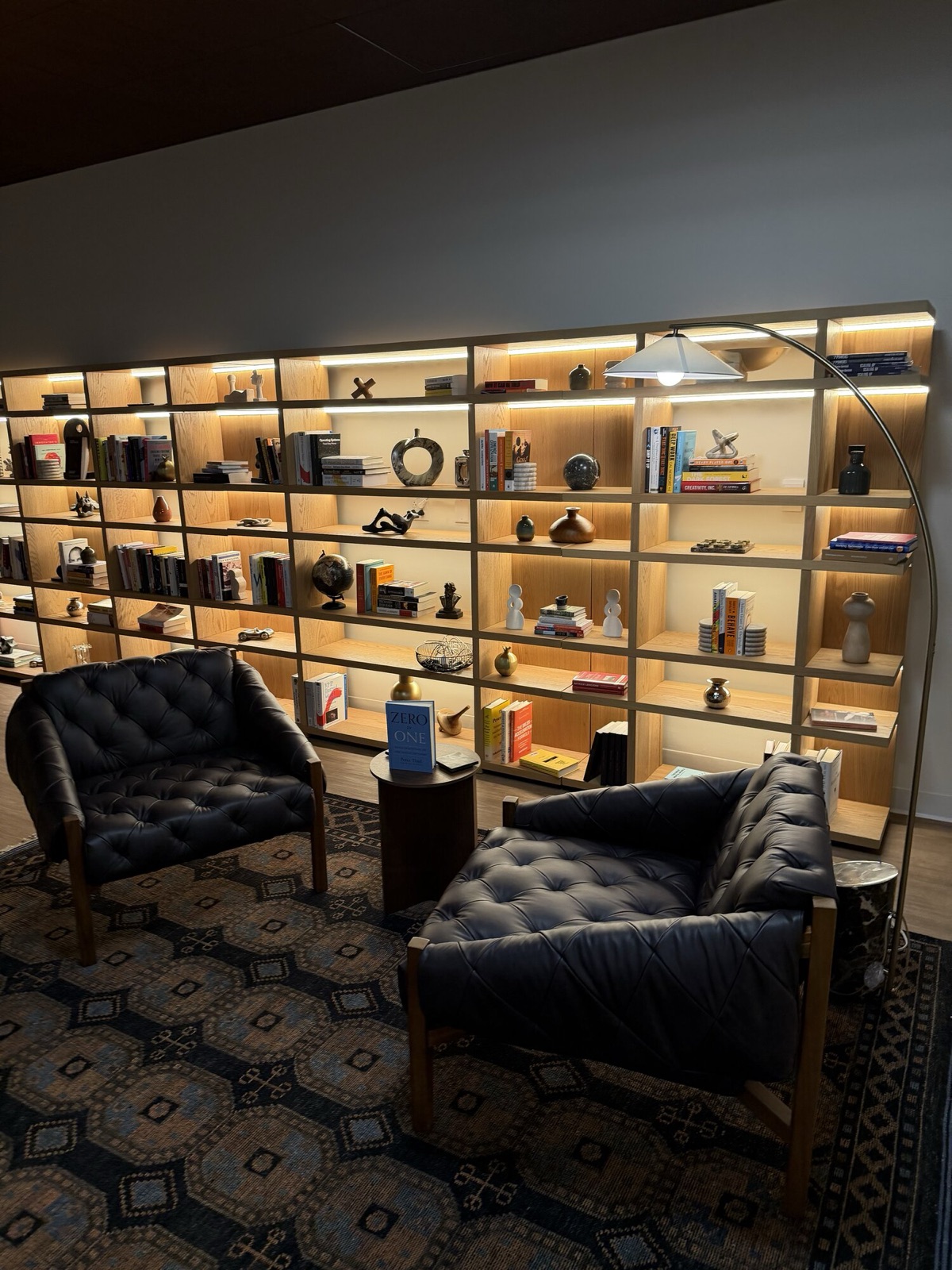
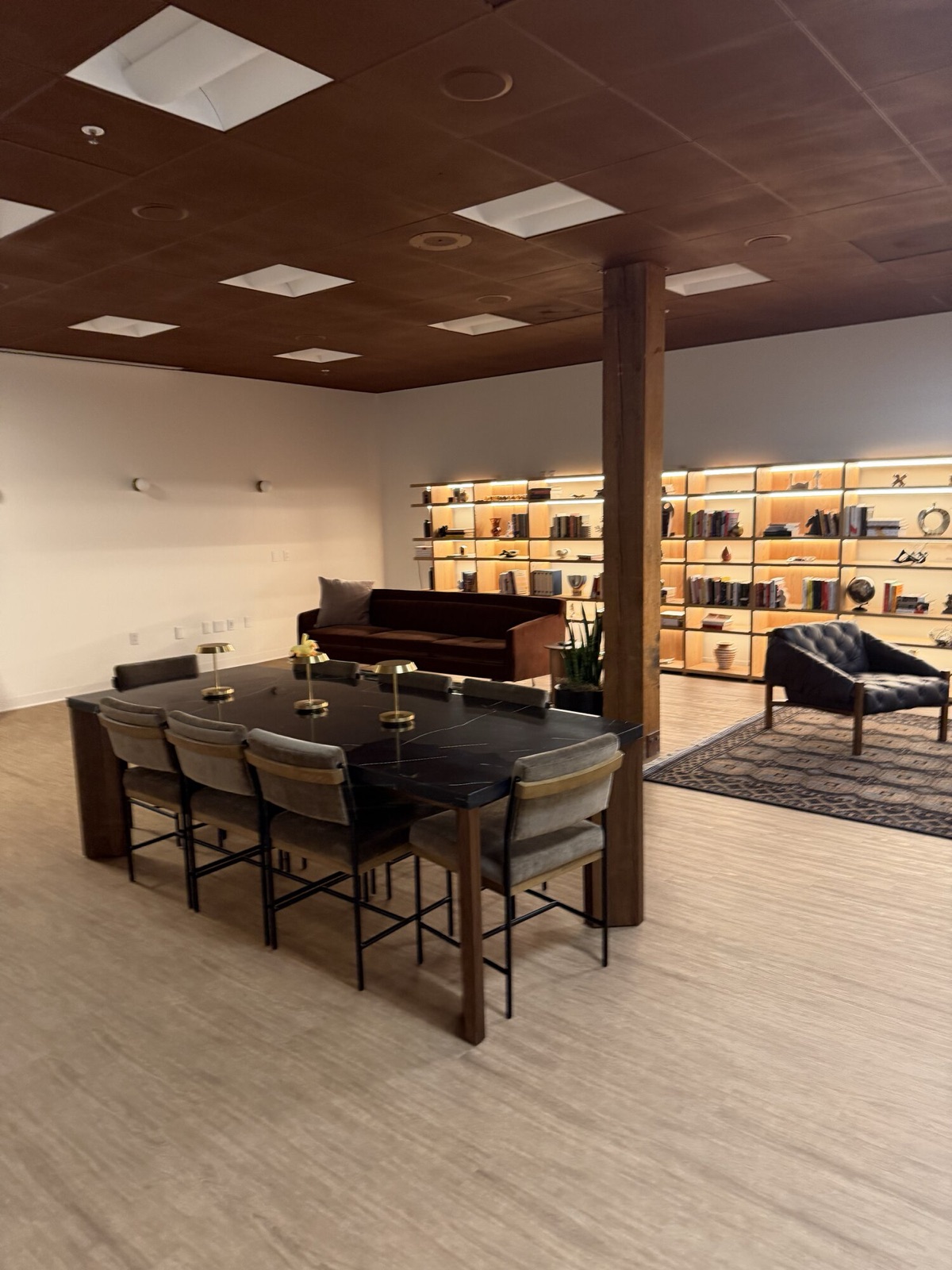
Recall.ai is a good product made by people who were easy to spend a morning with. The office is a pleasant place to be, with a stocked kitchen and a library bigger than some startups get for a whole office.
One thing from the morning stayed with me. Every open role is on-site, and the floor I walked before ten was mostly empty. At that hour in San Francisco that may say more about start times than about staffing, and it is the same picture at most companies asking people back: the office wins on paper, and the desks say otherwise. A return to the office is hard to impose. Recall sells the plumbing that makes it less necessary. Every product built on it turns a remote meeting into a more complete record than a room ever kept, and the case for hybrid and remote gets easier with each one. That is a good thing, even for a company that has bet the other way.
The per-participant desktop claim is the most specific thing she told me, and nothing I found contradicts it.
The market question answers itself. The best-known notetakers do not run their own bots, they run Recall's, and the companies with the most engineers to spare are the ones buying rather than building. Downstream, Granola raised $125 million in March at a $1.5 billion valuation for a notetaker that does not even use a bot. Amanda's line for why is the one I keep coming back to: "Context is basically the bottleneck right now, not intelligence of these AI models. And we are providing context."
What I could not get is the evidence for the claim the premium rests on, that customers stop complaining about everything except price. A public incident log would settle the reliability half of it, and by Recall's own ten-times-the-effort test it is cheap.
Building a product on meeting data, where your users notice when a bot fails: buy Recall. Under 100 employees: the startup program is $0.25 an hour for the first 10,000, and that eligibility rule is still not on the page. Past 10,000 hours, or picking on price alone: price Skribby and Attendee against it, because list with transcription is $0.65. Recording your own meetings for your own team: take Amanda's advice and look for the quick option, a notetaker off the shelf.
Sources
- The interview with Amanda Zhu at Recall.ai's San Francisco office, recorded with her knowledge and transcribed locally. Filler words and false starts are removed from quotes; any other cut is marked […]. The office tour the same morning with Maggie Veltri. Photographs by the author.
- Written answers from Maggie Veltri and Amanda Zhu to the questions I sent afterward, and Recall's fact check of this draft. Where the fact check is the only source for something, the text says so.
- Recall.ai's own pages and docs, with Internet Archive snapshots linked inline wherever the wording carries the claim.
- Pricing pages for Skribby, MeetingBaaS, Nylas and Attendee.
- Recall's Launch HN thread, each quoted comment linked.
Disclosure
Recall emailed in early August to say the pricing on this site was out of date. During that exchange I asked for an interview, and that is how we ended up in a room together. Before we met I checked every figure against the live vendor pages and shipped the corrections. Six went in Recall's favor, five against.
Recall saw the full draft and the transcript before publication and sent back corrections. I took the ones that were right and kept the judgments that are mine. Two customer names Amanda gave me on the record are held at Recall's request, because the products built on Recall have not launched; I had asked permission first. Nothing here was conditioned on the coverage. The site's usual rule is no advance review, and the policy page records this exception. No money changed hands, and there is no affiliate relationship with Recall.ai.